Interview
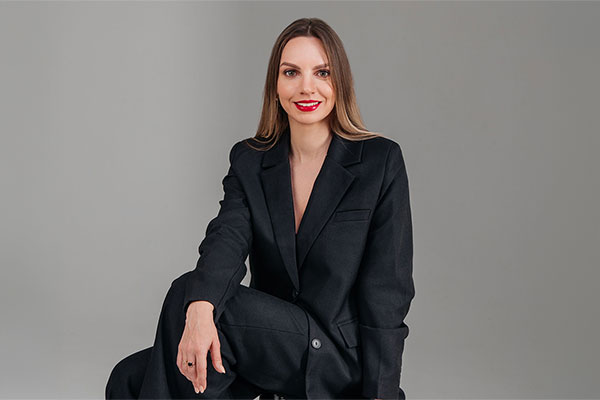
Anna Diyanova
Russia
Anna Diyanova is a Senior Product Designer whose background in HR, analytics, and consulting at KPMG, Deloitte, and Marsh informs her people centered approach to design, bridging human needs with business goals while championing thoughtful products and designer mentorship.
1 Congratulations on your achievements in the Vega Digital Awards! Could you start by introducing yourself or your agency? Can you also share a bit about your journey into your current industry?
I’m Anna Diyanova, a Senior Product Designer with a background in HR and analytics. Before moving into design, I worked at KPMG, Deloitte, and Marsh. That experience shaped how I approach product design: understanding people, asking questions, and connecting decisions to business needs. Today, I design digital products and mentor other designers.
2 What inspired you to submit your work for this competition, and what does winning mean to you personally and professionally?
Bricio began as an idea for a service that I wanted to bring to life through interface design. When I shared it with friends and colleagues, their encouragement gave me the confidence to enter the competition. Receiving a Silver Award means a great deal to me. It recognizes an independently developed concept and encourages me to keep sharing my work beyond my immediate professional circle.
3 Can you share the story behind your success? What inspired its creation, and what do you feel it represents in today’s industry?
The starting point was a simple question: when something breaks at home, how do you know which specialist to call? My award-winning entry explores how a mobile app can guide users from uncertainty to a booking request. I developed it as a concept and interactive prototype, combining camera based AI assistance with a manual service catalog. For me, it represents how technology can help people navigate unfamiliar tasks.
4 What do you believe set your project apart in such a competitive field? Were there specific elements or strategies that made it shine?
The central decision was to start with the user’s problem rather than asking them to choose a profession they might know little about. The proposed AI flow connects a photo of the issue to guidance, specialist recommendations, and a booking request. Equally important, users can browse manually, add details, and edit their requests. The assistant provides direction without taking control away from them.
5 Every project has its challenges. Can you share a significant obstacle you faced during this process and how you overcame it?
One challenge was making the AI assistant helpful without turning a practical task into a lengthy conversation. I refined the flow from scanning to recommendations and booking, keeping the next action visible at each stage. Connecting this flow to the same specialist profiles and booking screens used in the manual catalog also helped create a consistent experience.
6 Winning an award of this caliber often brings recognition. What do you hope this achievement will mean for your career, your team, or your agency in the long run? Have you already noticed any changes or opportunities arising from this recognition?
I hope this recognition helps introduce my work to product teams and collaborators who value thoughtful design. It is still too early to attribute specific opportunities to the award. For now, its most immediate impact is personal: it has given me greater confidence to share my ideas and pursue new projects.
7 What has the reaction been from clients, audiences, or stakeholders about your winning entry? Any feedback or memorable moments that stand out?
The most meaningful response came from my friends and colleagues. I initially shared my award-winning entry as an idea expressed through a set of screens, without necessarily planning to enter a competition. They encouraged me to share it more widely and submit it for consideration. Their support helped me take a step I might otherwise have postponed.
8 For those aspiring to achieve similar success, what advice would you offer to help them not only thrive in their industries but also craft compelling, award-worthy entries? Are there specific practices, mindsets, or strategies you believe are key?
Start with a problem you can explain clearly, then ensure your design decisions address it. For a competition entry, help the audience understand the reasoning behind the screens, not just their appearance. Be honest about what you have built, what you have tested, and what remains a hypothesis. A clear, thoughtful story is more valuable than exaggerated claims.
9 The digital industry is constantly evolving. How do you view these changes, and where do you hope to position yourself in the future?
The rapid development of AI makes this an exciting time to work in design. I’m interested in using it to improve my workflows and explore beyond interface mockups, including coding, websites, plugins, and bots. I want to become more capable of taking an idea from concept to something people can actually use, while keeping usability and human judgment at the center.
10 Entering awards can be daunting for many, especially those just starting out. What would you say to individuals who have limited experience, or are hesitant to showcase their work in competitions? How can they build confidence and see the value in participating?
You do not have to feel completely confident before sharing your work. Start with people whose opinions you trust, listen to their feedback, and give yourself room to improve. That encouragement mattered in my own experience. Competitions can provide a useful deadline and an opportunity to articulate your thinking, but an award should never become the only measure of your work’s value.
11 Innovation thrives on connection. What message would you like to share with fellow digital thinkers, marketers, and industry professionals?
Let’s share not only polished outcomes but also the questions and decisions behind them. As new tools make it easier to create, I believe thoughtful discussion becomes even more important. Through product work and mentorship, I value exchanges that challenge our perspectives, deepen our understanding of a problem, and help us create more useful solutions.
12 Winning is a team effort in many cases. Is there someone or a group of people you’d like to dedicate this achievement to, and why?
I would like to dedicate this achievement to my husband and son, who support me in everything I do and encourage me to keep moving forward. Their belief in me gives me the confidence to explore, learn, and take on new challenges. With their support by my side, I never want to stop growing.
13 If you could describe your award-winning entry in one sentence, what would it be and why?
My award-winning entry is a mobile app concept that helps people move from “What’s wrong, and who should I call?” to a clear next step in getting their home repaired. Its purpose is to make an unfamiliar and potentially stressful situation easier to navigate.
14 Finally, what’s next for you? Any exciting projects or upcoming goals that you’d like to share with us and the audience?
My next focus is growing within a product team and contributing to new projects. I’m also exploring AI assisted workflows that allow me to experiment with code and build websites, plugins, and bots alongside my design work. What interests me most is bringing these skills together: understanding a need, designing a user friendly experience, and finding more ways to turn ideas into reality.