Interview
Jingxuan Wang
United States
Jingxuan Wang is a Senior Motion Designer at LaunchDarkly whose work spans animation, visual storytelling, and campaigns for brands including Netflix and Sentry. Through independent projects such as Pipgro, she explores how motion and character can transform complex ideas into meaningful, human centered experiences.
1 Congratulations on your achievements in the Vega Digital Awards! Could you start by introducing yourself or your agency? Can you also share a bit about your journey into your current industry?
I’m Jingxuan Wang, a Senior Motion Designer currently working at LaunchDarkly. My background spans motion design, animation, visual storytelling, and video production across technology, entertainment, and advertising. I studied Computer Graphics at Purdue University before earning my MFA in Computer Arts from the School of Visual Arts in New York. Since then, I’ve had the opportunity to create motion work for companies including Netflix, LaunchDarkly, and Sentry, ranging from product storytelling and brand campaigns to large scale event experiences. What continues to interest me most about motion design is its ability to translate complex or abstract ideas into something people can understand and emotionally connect with. Alongside my professional work, I also develop independent projects like Pipgro, which give me space to experiment with character, storytelling, and new ways of communicating through motion.
2 What inspired you to submit your work for this competition, and what does winning mean to you personally and professionally?
I submitted Pipgro because it sits at the intersection of several things I care deeply about: design, technology, storytelling, and creating more human ways to communicate complex experiences. Receiving Gold in Health and Silver in Animation was especially meaningful because the recognition came from two different perspectives. The Health category recognized the idea and problem the project was trying to address, while the Animation category recognized how that idea was communicated through motion and storytelling. Professionally, it reinforces something I strongly believe: motion design can do more than make an idea look engaging. It can fundamentally shape how people understand and connect with it.
3 Can you share the story behind your success? What inspired its creation, and what do you feel it represents in today’s industry?
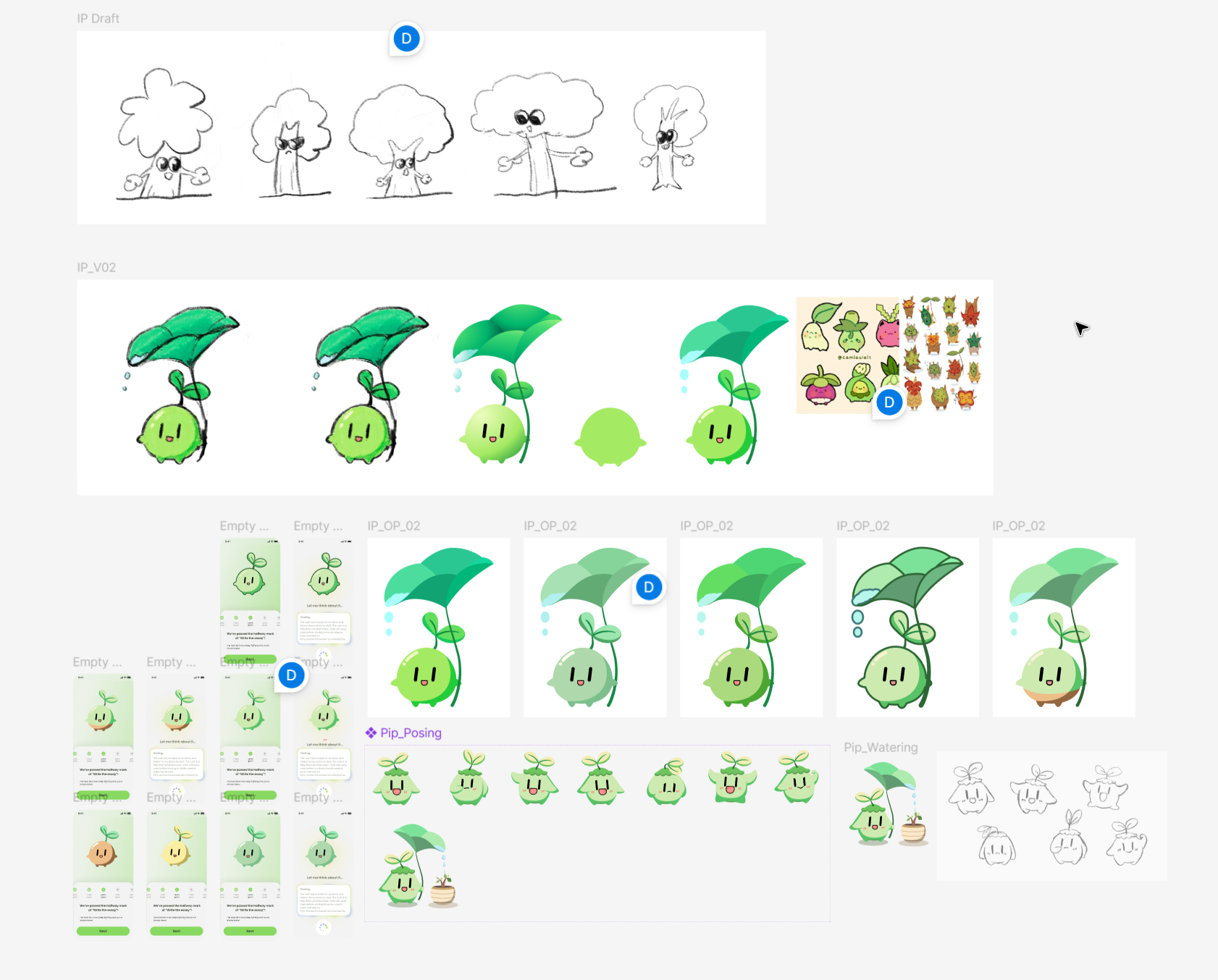
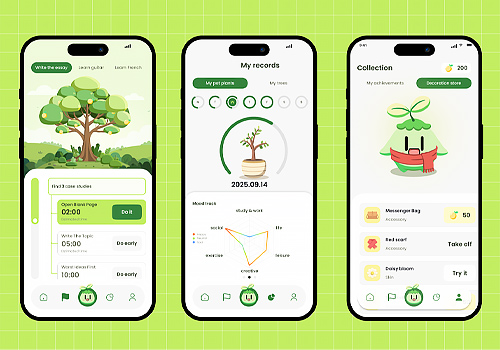
Pipgro began with a challenge that felt personal to me and several people close to me: sometimes knowing exactly what needs to be done doesn’t make starting any easier. Many productivity tools are built around planning and organization, but we became interested in a different question: what if the real barrier isn’t knowing what to do, but initiating it? That idea became Pipgro, an AI-powered task management concept built around breaking intimidating goals into smaller, more approachable actions. We paired that system with a companion character, Pip, and a growth mechanic in which progress is visualized over time. To me, the project represents a broader opportunity in digital design: technology can become more effective when functionality and emotional experience are considered together.
4 What do you believe set your project apart in such a competitive field? Were there specific elements or strategies that made it shine?
I think one of Pipgro’s strengths is that the concept and the storytelling were developed around the same emotional insight. When creating the film, I didn’t want viewers to simply watch a product demo. I wanted them to feel the problem first. Instead of opening with UI screens and features, the film begins by visualizing tasks accumulating into something overwhelming. Only after establishing that feeling do we introduce the idea of breaking a larger goal into smaller actions and show how the product could support that process. I also used simple character design and animation to make emotions such as confusion, frustration, and relief readable almost instantly. The simplicity was intentional. It allowed the story, interface, and motion to work together without creating additional visual overload.
5 Every project has its challenges. Can you share a significant obstacle you faced during this process and how you overcame it?
One of the biggest challenges was fitting an emotional story, a complex problem, and a product demonstration into a two minute film without turning it into a traditional walkthrough. I approached the film as a narrative rather than a list of features: first, establish the problem; then, introduce a different way of thinking about it; and finally, show selected moments of the interface only when they help move the story forward. I also created a simple user character with a rounded rectangular body and oversized eyes. Because the design is so minimal, emotions can be communicated very quickly through small changes in expression and movement. That helped me explain an internal and sometimes difficult to describe experience without relying entirely on words.
6 Winning an award of this caliber often brings recognition. What do you hope this achievement will mean for your career, your team, or your agency in the long run? Have you already noticed any changes or opportunities arising from this recognition?
I hope this recognition encourages me to continue developing work that sits between motion design, technology, and human centered storytelling. My award-winning entry began as a small independent collaboration, so seeing it recognized internationally is especially meaningful. More than anything, it gives me confidence that projects driven by personal curiosity and experimentation can resonate beyond the context in which they were originally created. It’s still very early to know what opportunities may come from the recognition, but I’m excited to see where the project and the conversations around it may lead.
7 What has the reaction been from clients, audiences, or stakeholders about your winning entry? Any feedback or memorable moments that stand out?
My award-winning entry is an independent design concept rather than a launched commercial product, so there are no traditional customer metrics or client feedback to share. What has been especially meaningful is seeing the work recognized across different creative disciplines. The concept received recognition while the introduction film also received an award. More recently, the Vega Digital Awards recognized the entry in both Health and Animation. Seeing the same work resonate across product concept, storytelling, and motion has been one of the most rewarding parts of the experience.
8 For those aspiring to achieve similar success, what advice would you offer to help them not only thrive in their industries but also craft compelling, award-worthy entries? Are there specific practices, mindsets, or strategies you believe are key?
I would start with the problem, not the award. The strongest work usually begins with something you genuinely want to understand, solve, or communicate. Once that foundation is clear, every creative decision, from visual style and pacing to animation and sound, has a reason to exist. I also think it’s important to edit aggressively. More information doesn’t always create better communication. Especially in motion design, knowing what to remove can be just as important as knowing what to create. For award submissions specifically, I would choose categories where the work genuinely belongs rather than trying to fit a project everywhere. A clear story about why the work exists and what makes it distinctive is often more memorable than simply showing polished execution.
9 The digital industry is constantly evolving. How do you view these changes, and where do you hope to position yourself in the future?
I think the role of motion designers is expanding rapidly. As AI and new creative technologies make production faster and more accessible, technical execution alone becomes less differentiating. The ability to decide what should be communicated, how it should feel, and why a particular visual approach matters becomes even more important. I’m very interested in the intersection of motion, product storytelling, and emerging technology. In the future, I hope to continue exploring how motion can make increasingly complex digital products feel more intuitive, human, and emotionally engaging.
10 Entering awards can be daunting for many, especially those just starting out. What would you say to individuals who have limited experience, or are hesitant to showcase their work in competitions? How can they build confidence and see the value in participating?
I would encourage people not to wait until they feel completely ready. Awards can be valuable not only because of the recognition, but because the submission process forces you to look at your own work critically: What is the idea? What makes it different? Why should someone care? You also don’t need a huge team or a major client to create meaningful work. My award-winning entry was developed by just two designers as an independent project. What matters most is having a clear idea and executing it with intention. Even when a project doesn’t win, learning how to articulate your decisions and present your work clearly is valuable in itself.
11 Innovation thrives on connection. What message would you like to share with fellow digital thinkers, marketers, and industry professionals?
Technology is changing incredibly quickly, but I think our responsibility as creatives remains surprisingly consistent: make complicated things understandable and make digital experiences feel human. The most exciting work often happens when different disciplines overlap. Designers, technologists, storytellers, marketers, and strategists may approach a problem differently, but those differences can create ideas none of us would reach alone. I hope we continue using new tools not simply to create more content, but to communicate with greater clarity, empathy, and intention.
12 Winning is a team effort in many cases. Is there someone or a group of people you’d like to dedicate this achievement to, and why?
I’d like to share this recognition with my collaborator, who worked with me on the concept and designed the product’s UI/UX. My award-winning entry benefited enormously from the intersection of our different disciplines. While I focused on the original idea, character and visual development, script, motion, animation, and storytelling, my collaborator brought a strong product and UX perspective to the project. That collaboration helped us think about the work not only as a story or visual concept, but as an experience that needed to make sense as a product.
13 If you could describe your award-winning entry in one sentence, what would it be and why?
My award-winning entry uses motion and character-driven storytelling to turn the invisible frustration of struggling to get started into something viewers can see, feel, and understand.
14 Finally, what’s next for you? Any exciting projects or upcoming goals that you’d like to share with us and the audience?
I’m continuing my work as a Senior Motion Designer at LaunchDarkly, creating motion and video across product storytelling, brand, campaigns, and live experiences. At the same time, I want to continue developing independent work that allows me to experiment more freely with storytelling, character, emerging technology, and AI. My award-winning entry reminded me how valuable it is to create something simply because a problem or idea feels worth exploring, and I’d like to make more room for that kind of work in the future.