Interview
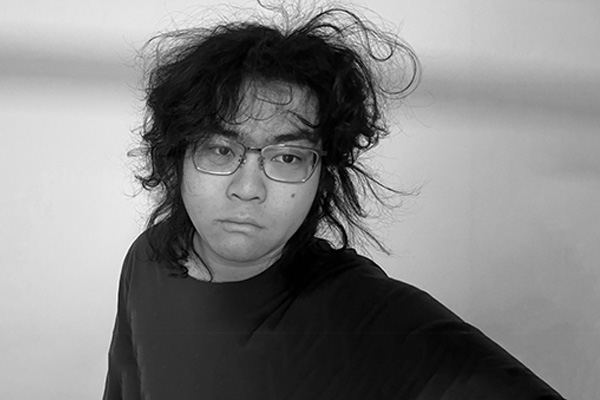
Jiabao Liu
China
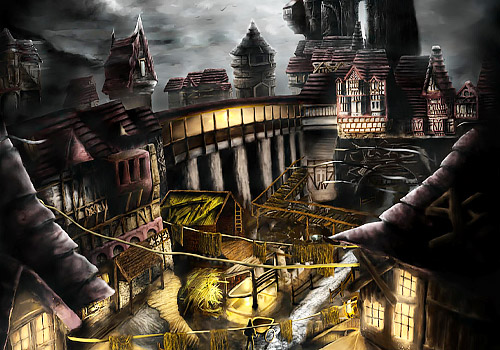
Jiabao Liu, a senior undergraduate, completed the submitted artwork over 284 hours, and this single 70-megapixel piece has secured him a Special Recognition from Light Space & Time.
1 Congratulations on your achievements in the Vega Digital Awards! Could you start by introducing yourself or your agency? Can you also share a bit about your journey into your current industry?
I am currently 23 years old, a senior undergraduate on academic leave, studying at a very ordinary university in China. So far, I have completed a little over 300 hours of self-study. The artwork I submitted to these competitions took me 284 hours to complete. To be more precise, I began self-studying art in early September, and by December, I had shifted my focus to working on my own projects. At present, this single 70-megapixel artwork has earned me a Special Recognition from Light Space & Time, a Silver Award from the Vega Digital Awards.
2 What inspired you to submit your work for this competition, and what does winning mean to you personally and professionally?
What motivated me to participate in these competitions was a sense of survival. I want to build a Dyson swarm and a hibernation chamber. Earlier in 2025, I attempted to contact many large institutions, media outlets, and organizations, such as NUS and Temasek, in the hope that they would invest in my projects. One of these projects was a card-based RTS game. I sent around 400 emails but received no responses. My original plan was to use this company as a leverage point to launch other companies, such as a hexapod robotics company and a hydroponic farming company, forming a group of companies that could eventually generate enough capital to pursue the Dyson swarm and the hibernation chamber. That plan failed. Things became more difficult when my existing visa plan also collapsed. I had previously received an offer from RPI (Rensselaer Polytechnic Institute) in the United States. I was a computer science major, and my plan was to transfer to RPI for two years, conduct research on hexapod robots there, and then pursue a PhD in the U.S. During my PhD, I planned to build a hexapod robot demo and seek investment from Elon Musk and Temasek, using that company as the core leverage point to build the rest of the company group. However, RPI appeared to be concerned by my ideas and withdrew my offer one day before my U.S. visa interview, citing discrimination against women as the reason. This was why I went on academic leave. After that, I decided that I had no choice but to raise money on my own and start a company independently. My next idea was to approach galleries: participate in competitions, secure exhibitions, build reputation and visibility, and then approach Temasek again for investment. However, top-tier galleries such as Gagosian and Perrotin reviewed my emails nearly 200 times and still chose not to work with me, even though the artwork had already been completed. At that point, I had no alternatives left. As a result, the only option remaining was to rely on my RTS card game project as the leverage point for my future companies. Participating in these competitions was therefore mainly about building reputation. While this could make future gallery exhibitions easier, the more important purpose was to increase credibility for a future Kickstarter crowdfunding campaign, so that it could raise a higher level of funding. This entire story has been described in an extremely condensed form and took place in the second half of 2025.
3 Can you share the story behind your success? What inspired its creation, and what do you feel it represents in today’s industry?
As I stated at the beginning, the original purpose of creating this 284-hour artwork was for gallery exhibition. In fact, even that was not the initial intention—it began simply as a practice piece. What ultimately drove its creation was a sense of survival. At the time, I felt I had no alternatives: if I failed, I would be forced to return to school, and in that case, I believed my ambitions would slowly fade. So every time I wanted to stop, I pushed myself to continue refining it. That is how it eventually reached 284 hours. The work itself does not carry any special meaning within the industry. The only thing it represents is the depth of my resentment toward institutions.
4 What do you believe set your project apart in such a competitive field? Were there specific elements or strategies that made it shine?
As I mentioned earlier, I have no formal training. I simply kept adjusting the painting based on what looked good to me. If a part felt unattractive or overly rigid, I changed it directly, repeating the process until I was satisfied. So if there is anything distinctive about the work, I believe it is the overwhelming density of detail at first glance, the highly psychedelic lighting, and the extremely exaggerated sense of scale that sets it apart.
5 Every project has its challenges. Can you share a significant obstacle you faced during this process and how you overcame it?
Of course there were challenges, but I did not have any clever way to overcome them. I felt like a monkey sitting in front of a typewriter, relying on almost countless repetitions—trying endless brushes again and again—until I found a way of painting that worked, turning the object into what I originally saw in my mind. I had no real technique, just sheer repetition, producing results through brute force.
6 Winning an award of this caliber often brings recognition. What do you hope this achievement will mean for your career, your team, or your agency in the long run? Have you already noticed any changes or opportunities arising from this recognition?
I believe what this may bring is that, when potential investors Google my name in the future, there will at least be an official website rather than nothing at all. It could also increase the amount raised on Kickstarter by around 10–20%. Additionally, it may raise the probability of Perrotin or Gagosian exhibiting this work by another 20%.
7 What has the reaction been from clients, audiences, or stakeholders about your winning entry? Any feedback or memorable moments that stand out?
I have almost no friends, let alone clients or stakeholders. At most, there is one person who could be considered a friend. The few After Effects editors I recently contacted only said that the work was “pretty good.” It may be a cultural difference—I am not sure how strong expressions like “sick” or “dope” actually are. During the painting process, there was no positive feedback at all. I worked on it alone for two months.
8 For those aspiring to achieve similar success, what advice would you offer to help them not only thrive in their industries but also craft compelling, award-worthy entries? Are there specific practices, mindsets, or strategies you believe are key?
I do not believe I am truly qualified to offer techniques to others, because creating this work came at the cost of significant strain on my physical health. I approached it with a do-or-die mindset, believing it was the only thing I could do at that moment. If I had to offer any advice at all, it would be to have enough patience and to take care of your physical health.
9 The digital industry is constantly evolving. How do you view these changes, and where do you hope to position yourself in the future?
The biggest variable in the digital industry is AI. I believe digital creators need to accept it. This is no different from how machines replaced textile workers during the steam era. My positioning is to create things that do not exist in reality at all and to leave a deep impression—that is probably my way of not being replaceable.
10 Entering awards can be daunting for many, especially those just starting out. What would you say to individuals who have limited experience, or are hesitant to showcase their work in competitions? How can they build confidence and see the value in participating?
Do not be afraid of failing. People only remember how many times you succeed, not how many times you fail.
11 Innovation thrives on connection. What message would you like to share with fellow digital thinkers, marketers, and industry professionals?
I honestly do not know what kind of innovation that sort of physics experiment actually represents.
12 Winning is a team effort in many cases. Is there someone or a group of people you’d like to dedicate this achievement to, and why?
This artwork was created entirely by myself, and I worked through the process without external affirmation or feedback.
13 If you could describe your award-winning entry in one sentence, what would it be and why?
The only way I can describe it is that it felt like a miracle. I actually managed to finish it and endure all the way through.
14 Finally, what’s next for you? Any exciting projects or upcoming goals that you’d like to share with us and the audience?
Yes—there is. It is the RTS card game project I mentioned earlier. My current plan is to launch my official website and Kickstarter and to recruit several concept artists and video editors. I will be responsible for composition, worldbuilding, and card mechanics design. After that, the goal is to raise USD 100,000 through crowdfunding and then recruit programmers to build a demo. Next, I plan to accumulate up to USD 5 million using a black-box floating pricing mechanism. With that, I will rent a large open-plan space in Singapore and recruit a core team. At that point, I expect Perrotin will invite me for an exhibition. Then I will be able to approach Temasek for investment and officially launch my first company.